
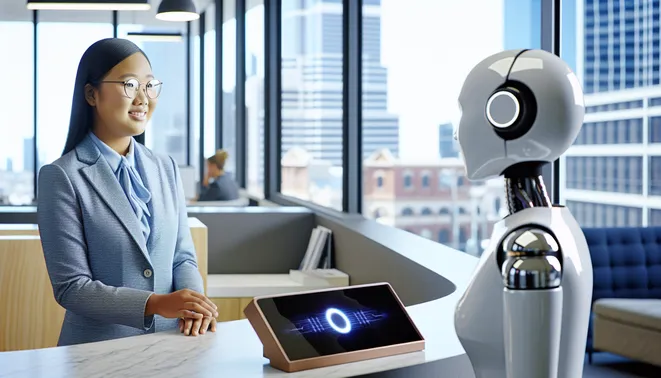
Why Melbourne Real Estate Agents Are Adopting AI Receptionists in 2026
The Call for Change: Melbourne's Real Estate Landscape in 2026
As we look towards 2026, Melbourne's real estate landscape is undergoing profound transformation. With rising consumer expectations, increasing competition among agents, and the challenges posed by economic pressures, the need for innovative operational strategies has never been more pressing. A significant shift is evident; businesses must evolve to not only survive but thrive in this dynamic environment. A staggering 75% of consumers now expect immediate responses to inquiries, reflecting a significant change in customer engagement norms. This heightening demand is pushing real estate agents to adapt swiftly, making room for solutions that can support and enhance their business operations.
Amidst these challenges, agents face heightened market competition. According to a recent study, the number of registered real estate agents in Melbourne surged by 22% in the last two years, resulting in a saturated market where differentiation is critical. Agents who fail to leverage technology risk becoming obsolete, as prospective clients now compare services and responsiveness across multiple agencies. This competitive pressure demands that agents not only maintain but also improve their service delivery, prompting many to consider how automation can relieve them of repetitive tasks, allowing them to focus on personalised client interactions.
Another critical factor influencing this transformation is the increase in operational costs due to rising material prices and overall inflation. The Australian Bureau of Statistics noted that the area of residential building approvals remained volatile, attributing this to growing input costs that have increased by as much as 7.1% annually for some non-residential projects. As such, real estate agencies are compelled to seek solutions that promise enhanced efficiency and cost control. Automated systems, particularly AI-driven tools like receptionists and voice agents, can streamline inquiry management, reduce overheads, and improve conversion rates while maintaining a high level of customer service.
AI Receptionists are emerging as a critical tool in meeting these evolving demands. By providing 24/7 customer engagement, these systems ensure no lead is lost—capably handling inquiries at any hour, thus capturing opportunities that would otherwise slip away after hours. They can qualify leads, provide immediate answers to frequently asked questions, and seamlessly integrate into existing CRM systems, all whilst enhancing the customer experience by ensuring consistent and rapid responses. As research shows, integrating such automated solutions can lead to a conversion rate improvement of up to 30% for real estate agencies.
As we approach 2026, embracing AI automation is no longer a luxury but a necessity for real estate agents looking to stay competitive in Melbourne. By leveraging solutions from SYSTREE, agencies can optimise their operations, enhance client interactions, and ultimately secure their position in a rapidly evolving market. To explore more on how to transform your agency’s efficiency with intelligent automation, check out our insights on effective strategies for small businesses.
Unlocking Potential: How AI Receptionists Are Reshaping Client Interactions
Imagine a prospective homebuyer, John, calling a real estate agency at 8 PM after a long day of work, eager to inquire about a property listing he just stumbled upon. Instead of being greeted by an indifferent voicemail, he’s welcomed by a friendly AI receptionist who answers his questions and schedules a viewing—instantly. This scenario is becoming increasingly common as AI receptionists revolutionise how real estate agents engage with leads, preventing lost opportunities and enhancing customer satisfaction.
The implementation of AI receptionists directly addresses critical pain points faced by real estate agents. Research reveals that approximately 70% of property inquiries in Australia occur outside standard business hours, highlighting a crucial gap in traditional engagement methods. AI receptionists bridge this gap by providing 24/7 availability, customised interactions, and seamless communication, ensuring that every lead is nurtured regardless of the time of day. This consistent engagement can lead to improved conversion rates—one study found that businesses leveraging AI-driven solutions saw a 30% increase in inquiry responses.
Real estate agents in Melbourne are reporting significant improvements in both lead conversion and customer satisfaction metrics after adopting AI receptionists. For instance, a Melbourne-based agency reported that their lead conversion rates doubled after implementing an AI voice agent, which qualified leads and scheduled follow-ups automatically. The system intelligently engages clients with relevant information, answers frequently asked questions, and collects necessary data, allowing agents to focus more on personal interactions and strategy rather than administrative tasks.
The efficiencies created by AI receptionists extend beyond immediate customer engagement. By automating routine inquiries, these AI systems free up human agents to handle complex matters requiring personal attention, thus enhancing the overall client experience. Moreover, AI receptionists provide detailed analytics and insights into lead behaviour, allowing real estate agencies to optimise their follow-up strategies based on real-time data. This not only boosts lead capture during after-hours but also supports proactive engagement, driving better results for all stakeholders involved.
Incorporating an AI receptionist, like those offered by SYSTREE, equips Melbourne real estate agents with a powerful tool to improve their client relationships. By automating after-hours engagement and streamlining lead capture, agents can ensure they never miss a potential opportunity. This advancement is becoming essential for real estate professionals committed to maintaining a competitive edge in today’s dynamic market. Embracing this technology not only enhances efficiency but also directly translates into increased sales and customer loyalty. If your agency hasn’t considered implementing an AI receptionist, now is the time to explore how these solutions can transform your operations and enhance your service offering. To learn more, visit our AI solutions page and take the first step towards modernising your client interactions.
Navigating the Challenges: Common Pain Points for Agents and How AI Addresses Them
In the fast-paced world of real estate, missed opportunities can mean lost commissions. Consider this statistic: a staggering 75% of potential leads will choose a competitor after a missed call. This is a challenge many real estate agents face daily. With inquiries piling up, manual follow-ups slipping through the cracks, and lead management systems that do little to optimise workflows, agents find themselves bogged down in inefficiencies that overshadow their ability to close deals.
For agents, the pressure of being constantly reachable is palpable. How do you juggle numerous calls, responses to emails, and the relentless need to follow up with prospects? A common way to manage this is to employ administrative staff, but this solution can often be both costly and impractical, particularly for smaller agencies. According to recent reports, up to 30% of inquiries can happen outside regular business hours, leaving many agents powerless to capture those leads. Moreover, paths to client conversion are often cluttered due to poor lead qualification processes, which can lead to time wastage on inquiries that may never result in sales.
Enter AI receptionists, a transformative solution that revolutionises how real estate agents interact with leads. These intelligent systems offer 24/7 availability, ensuring that no potential client is left unanswered—no matter the hour. Not only can AI voice agents handle routine inquiries and qualify leads through structured questions by assessing their level of interest, but they can also schedule viewings and answer frequently asked questions, allowing agents to focus more on high-value client interactions. With studies indicating that AI can improve response rates by as much as 30%, it’s clear that integrating this technology can lead to a substantial boost in productivity.
Moreover, AI receptionists contribute to seamless lead management by collecting and recording vital information from inquiries in real-time. This data can then be automatically fed into CRM systems for efficient follow-up processes. Imagine having your leads meticulously organised and categorised without lifting a finger—this is the future of real estate management. According to industry insights, agents using AI to automate their workflows can enhance their lead conversion rates by upwards of 40%. This shift not only increases revenue potential but significantly enhances the overall customer experience.
In conclusion, navigating the daily challenges of real estate requires agility, and that’s where SYSTREE's AI Voice Agents come into play. By minimising missed calls and automating the tedious aspects of lead management, these intelligent systems allow agents to invest their time into building relationships and closing deals rather than getting bogged down in repetitive administrative tasks. Embracing AI technology is not just an upgrade—it's an essential strategy for growth in an increasingly competitive market.
Embracing the Future: Trends Driving AI Adoption in Real Estate
As the real estate industry continues to evolve, a seismic shift towards the adoption of artificial intelligence (AI) is occurring across the globe. In Australia, this transformation is being driven by advancements in machine learning, changing consumer behaviours, and the urgent need for digital transformation. According to a recent report by the Real Estate Institute of Australia (REIA), 72% of real estate professionals acknowledge that technological integration is essential for staying competitive in today's market. This figure underscores a crucial trend: businesses that leverage AI tools, such as AI receptionists, are positioned to enhance efficiency and customer engagement significantly.
One of the most notable trends influencing AI adoption is the increasing expectation for instant communication. Today's consumers demand quick responses and efficient service, valuing their time more than ever. A study conducted by McKinsey & Company reported that 80% of buyers prefer an immediate response when they contact an agency, even outside regular business hours. This expectation has led many agents to adopt AI-powered tools that not only facilitate 24/7 communication but also streamline tasks like lead qualification and appointment setting. For Melbourne real estate agents, embracing AI voice agents can significantly improve customer service by ensuring that no inquiry slips through the cracks, especially during after-hours.
Moreover, the global pandemic has accelerated the digital transformation of various sectors, including real estate. Agents have adapted to a more virtual-centric approach, utilising technology for property viewings, client engagement, and transaction management. According to the Australian Bureau of Statistics, the use of digital platforms in real estate transactions increased by over 50% during the pandemic. This behaviour shift has compelled agents to not only adopt remote technologies but also rethink their entire process to better suit a digitally savvy clientele. Agents who understand and adapt to these trends can not only enhance their operational efficiency but also significantly increase their market competitiveness.
As these trends continue to shape the industry, the integration of AI voice agents into real estate operations will likely become more prevalent. These tools can manage inquiries and provide immediate responses, ensuring a seamless customer experience. SYSTREE's AI voice agents empower real estate professionals to enhance customer service and support lead capture efforts effectively. By automating routine tasks, agents can focus on building relationships and closing deals. As more agencies transition towards these AI solutions, staying informed about these emerging trends is essential for any real estate agent aiming to thrive in the evolving landscape of 2026.
Implementing AI: Steps Towards a Smarter Real Estate Business
As the real estate industry in Melbourne continues to evolve, the integration of AI technology is becoming essential for agents aiming to enhance their operational efficiency and client engagement. By 2026, Australian real estate professionals are increasingly recognising that embracing AI, specifically AI receptionists, can significantly transform their businesses. But where do you begin? Here’s a practical, step-by-step guide to smoothly integrating AI receptionists into your real estate processes.
First, it’s crucial to assess your current systems and identify pain points where AI can make a meaningful impact. Common challenges include high volumes of missed calls, slow lead follow-ups, and the overwhelming workload from administrative tasks. According to a study by McKinsey, organisations implementing AI can achieve productivity gains of up to 40%. In real estate terms, this could translate to vastly improved responsiveness to potential buyers or renters who are increasingly seeking immediate engagement.
Next, set clear goals for your AI implementation. Whether you aim to enhance lead capture, provide 24/7 customer service, or streamline appointment scheduling, defining functionalities will guide your selection of the right AI system. During this planning stage, consider ways to leverage AI to gather and analyse customer data. This allows for personalised interactions and helps build stronger relationships with clients. For an example of how successful agents are using AI to automate follow-ups and improve engagement, take a look at our article on increasing lead conversion through AI.
Moving forward, choose an AI solution that fits seamlessly with your existing systems. SYSTREE offers AI receptionists that are designed to work with your current workflows, ensuring a smooth transition. These virtual assistants can answer queries, schedule viewings, and collect lead details effortlessly. However, implementation doesn’t stop at just the software; training your team to work alongside AI tools is an equally vital step. By creating an understanding of how AI enhances their roles rather than replacing them, you can foster teamwork and maximise the benefits of the technology.
Finally, it's important to monitor performance regularly. Collect data to evaluate how well the AI integration is performing against your initial goals. Are you seeing reduced response times? Are there fewer missed calls? By continuously assessing your AI tools, you can make informed adjustments to optimise their effectiveness. Real estate professionals who effectively monitor their AI systems report an average of 30% increased engagement rates with clients, showcasing how critical this final step is to ensure ongoing success.
Implementing AI receptionists is not merely a trend; it’s a forward-thinking move that can future-proof your business in an increasingly competitive market. With SYSTREE supporting you, your agency can lead the way in embracing technological innovations that enhance operational efficiency and foster better client relationships. For more insights on integrating AI into your customer relationship management, explore our comprehensive guides on CRM automation.
